

Yes for Buses
Proposition 1 protects and expands Spokane Transit for another 20 years

On August 4, voters in Spokane Transit’s service area will have an opportunity to renew the existing 0.2% sales tax that funds service across the region. This measure provides critically-important revenue for the agency, and should be considered the bare minimum in supporting How A Great City Moves.
In 2016, I wrote about what the prior measure would accomplish and how voters should consider it, so I figured I’d reprise that effort for the 2026 edition.
So without further ado, let’s dive in!
What the measure is
It’s an extension of an existing 0.2% sales tax (not a new one!) for another 20 years.
That means for every $10 retail purchase, 2¢ will continue to go to supporting public transit operations and capital improvements. This tax is not collected on groceries or gasoline, and unlike measures in western Washington, it’s not a property tax.
Say you purchase a new $1,000 laptop at the Best Buy store in north Spokane. That’s a pretty uncommon purchase—not something you’ll do every day, every week, or every month. But the difference between a “yes” and a “no” vote is minimal. Under existing sales tax laws and with a “yes” vote, you’d pay about $91 in sales tax. Voting “no” only saves you $2. And remember, that’s on one of the largest purchases you’re likely to make.
What STA will do if the measure passes
Mostly, the agency would keep doing what it’s doing—delivering safe, reliable, and frequent transit to more than 500,000 local residents. Proposition 1 provides about $30 million per year, or about 20% of the agency’s budget, plus about $12.6 million each year in state support, so its renewal is essential.
But if passed, STA will also begin work on its Connect 2035 strategic plan, which means it will:
Launch Division BRT, significantly improved I-90/Valley service, and high-performance transit on the Wellesley corridor, one of the agency’s busiest, currently served by the 33 Wellesley.
Continue to improve bus stops across the service area with important features, like shelters, lighting, and ADA ramps.
Create new mobility-on-demand services in underserved parts of the service area, like the Latah Valley, North Spokane Valley, and Liberty Lake.
Create and expand a new low-income fare program.
Increase partnerships with the City of Spokane and others to build more transit-oriented development surrounding high-frequency transit lines.
Include transit passes with event tickets.
Expand the agency’s still very nascent employer pass program, which is a sought-after benefit in many regions across the country.
Improve operations facilities and amenities for operators, including increased investment in a zero-emissions fleet.
Improve real-time information systems and add data dashboards for easy public accountability.
What STA will do if the measure fails
It’s really quite simple.
If the measure fails, the 0.2% sales tax will expire on December 31, 2028 and the agency will lose 20-30% of its budget. That means STA would have to reduce service to match this lower level of available funding, and likely cancel important projects like Division BRT and corridor improvements along the 33 Wellesley, cancel mobility on-demand projects, and cancel its planned low-income fare pilot program.
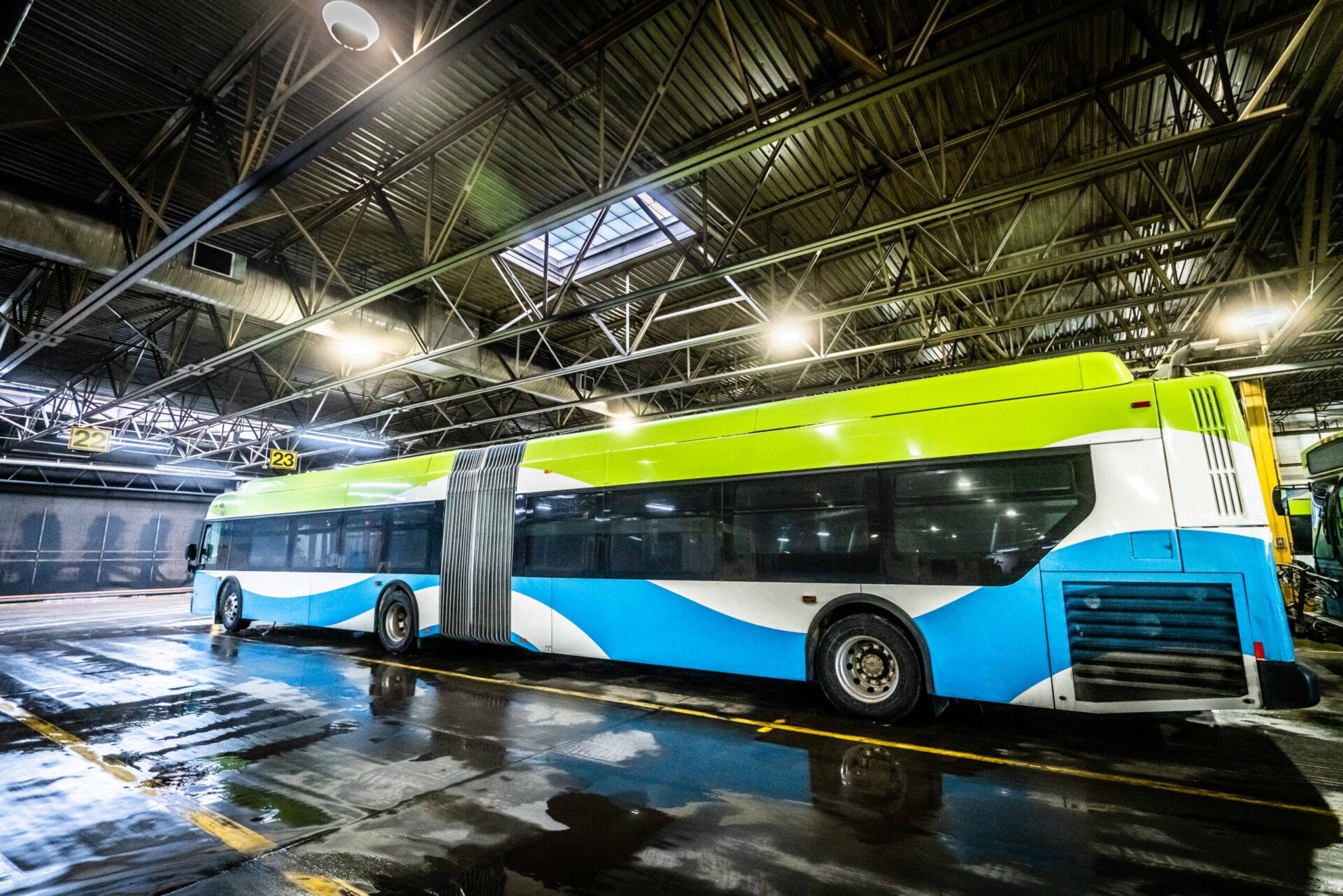
Reduced sales tax funding would decimate local transit.
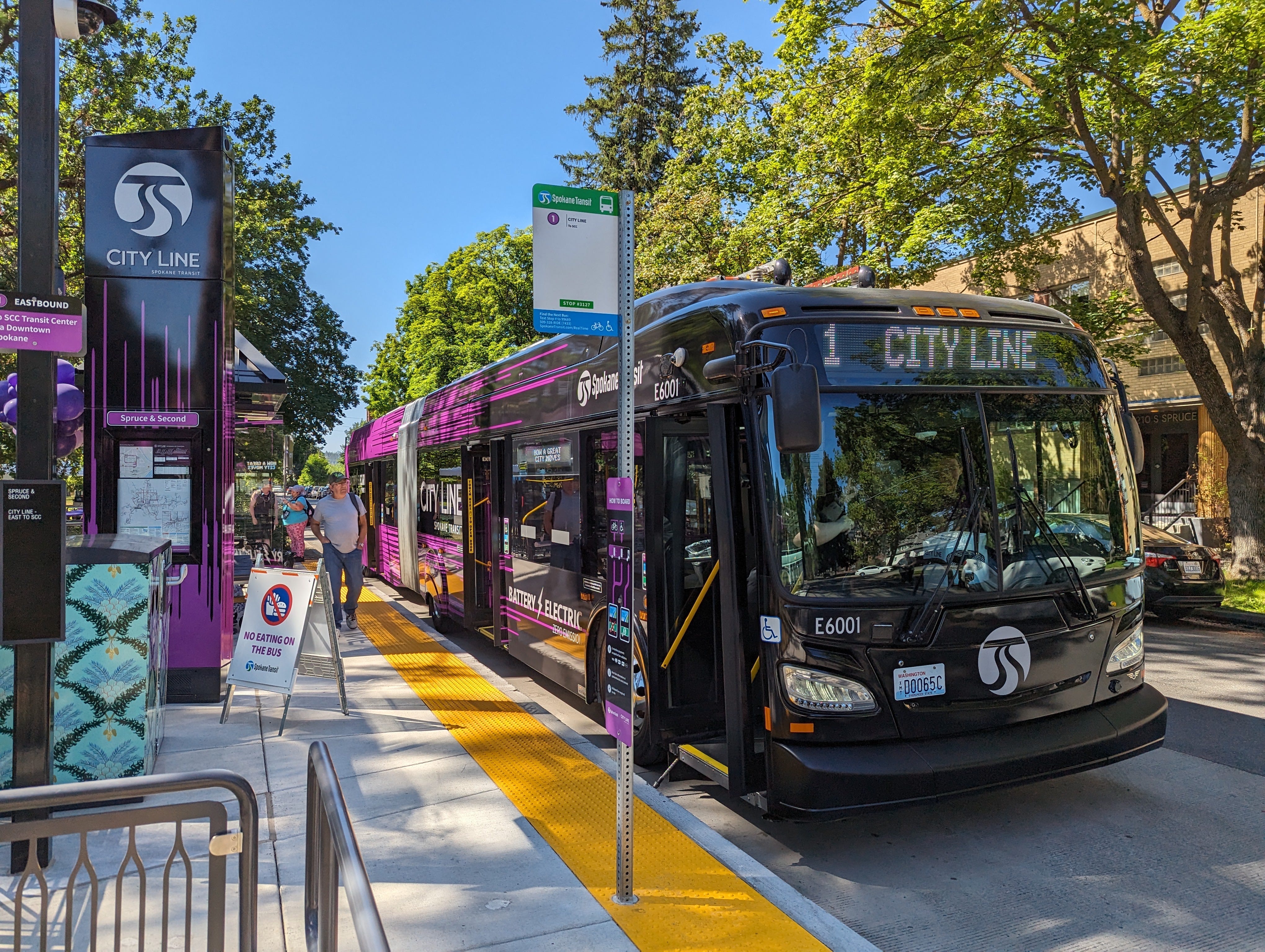
I don’t wish to paint too bleak of a picture, but it’s safe to say there would be substantial service cuts across the system. Many routes which currently see 15-minute service would see cuts to 30-minute or even 60-minute service. Routes which see 60-minute service may be cut altogether. More than 35% of existing service hours would be cut—so no more late-night rides, and forget about Sunday service after 6pm or so. The City Line, the crown jewel of our system, would likely see service cuts from 7.5 minutes at peak to 15 or 20 minutes at peak, and 30 minutes off-peak. Simply put, it would set back our transit service more than 15 years.
Now, of course, with a year and change yet to go before the current 0.2% sales tax expires, there’s still time to run the measure again if it fails. But we shouldn’t count on that. Conservatives already have their knives out for STA, and we mustn’t get complacent. Even if the measure returns on a future ballot, it’s unlikely it would look the same or provide the same level of service. The best defense is to vote yes now.
About those reserves
Over the past several years, there has been some overwrought criticism of STA’s significant cash reserves, including from both conservative anti-transit and progressive pro-transit folks. As of December 31, 2025, the agency held about $76 million in reserve. It is important to understand that these reserves are not unallocated cash—they serve important functions that are essential for any large agency, like:
Self-insurance: STA holds about $5.5 million in self-insurance to protect the agency in event of a catastrophic event related to its underground storage tanks.
Operating reserve: The agency holds 15% of its operating budget in reserve each year to protect against sudden financial or operational challenges. In 2026, this was about $21.5 million.
Fleet replacement: More than $18 million is held to proactively plan for replacement of buses and paratransit vans as they reach end-of-life. Many agencies fail to adequately plan for the full lifecycle of their fleets.
Right-of-way acquisition and real estate: A reserve of about $30 million allows the agency to act quickly on real estate transactions that are strategic to the organization’s mission.
These reserves are completely normal for an agency of STA’s size—especially one that is 100% debt-free.
STA is an exceptionally well-run agency
Now, let’s talk about STA as an agency, separate from its funding source. This is an exceptionally well-run government agency, from top to bottom.
It can plan ahead. With STA Moving Forward, its last ten-year strategic plan, the agency delivered on all of its key priorities, including 35% more service hours (62% on weekends!), increased ridership, and many major capital projects, often delivered under-budget and ahead-of-schedule.
Ridership is up and growing. In fact, STA provided more than 10.4 million rides in 2025, making it one of the first agencies its size to provide more rides than it did before the pandemic.
Its planners consistently deliver the highest-quality transit improvements in the state. The City Line, in particular, was delivered almost $15 million under-budget, but still features superb real-time information signage, all-electric buses, on-board wayfinding, bespoke station artwork, and more. I’m not kidding—this service beats most BRT lines in western Washington, and it’s not close.
It is debt-free, which is exceedingly rare for public agencies of its size across the state. That demonstrates an ability to proactively plan, and importantly, it means every dollar we send to STA through sales tax goes directly to transit projects and service, rather than to debt repayment and interest.
Vote yes
Let’s keep this simple. I think a vote for Proposition 1 is a total no-brainer.
I’m excited about what Karl and team can do with the assurance of another 20 years of consistency, and I’m excited by the service additions STA has on the way. The agency is well-run, has rockstar staff, and has a clear vision, from Division BRT and beyond. Let’s keep the transit excitement going and pass Proposition 1 on August 4.